




Microblading & Ombre Brow Pigments for Every Skin Tone and Technique
Brow pigment choice shapes everything — how natural the hair strokes read, how the powder effect settles after healing, whether a warm brunette stays warm or pulls cool and grey six months out. This collection stocks 89 brow pigments across nine brands, covering the full spectrum from light blonde taupes to near-black dark browns used in powder brow and microblading work.
Perma Blend is the most-stocked PMU-specific brand in the collection, with 17 dedicated brow shades. Taupe is one of the most-ordered shades for fair and cool-toned clients — it heals neutral without pulling ashy. Brunette and Forest Brown sit in the mid-range and work well across a wide variety of skin tones. Darkest Brown and Blackish Brown are the go-to options when a client wants definition that reads as close to their natural hair colour as possible. Espresso lands between the two — dark enough to build depth, not so saturated it goes flat on the first fade.
World Famous brings 18 shades to the collection, with names that reflect exactly where they sit in the brown family: Sahara and Grand Canyon for warmer sandy tones, Caramel and Nutella in the mid-warm range, Tobacco Dock and Tree Branches for cool-leaning medium browns, Dark Chocolate and Brooklyn Brownstone for deeper work. These cross over comfortably between brow tattooing and decorative tattoo work, which makes them a practical choice for studios that do both.
Etalon Mix For Eyebrows is a four-shade system built around the most common brow colour categories: #1 Hazelnut/Universal, #2 Milk Chocolate/Basic, #3 Cognac/Warm Brunette, and #4 Light Brown. The numbering reflects real workflow logic — artists who know Etalon Mix can pull the right bottle without second-guessing. All four come in 10ml bottles.
Biotek has 14 shades here — one of the larger brand footprints in the collection alongside Perma Blend. Biotek's brow range is purpose-built for PMU, with formulas that address the specific challenges of eyebrow skin: variable oiliness, follicle interference, and the way brow skin heals differently from area to area on the same client.
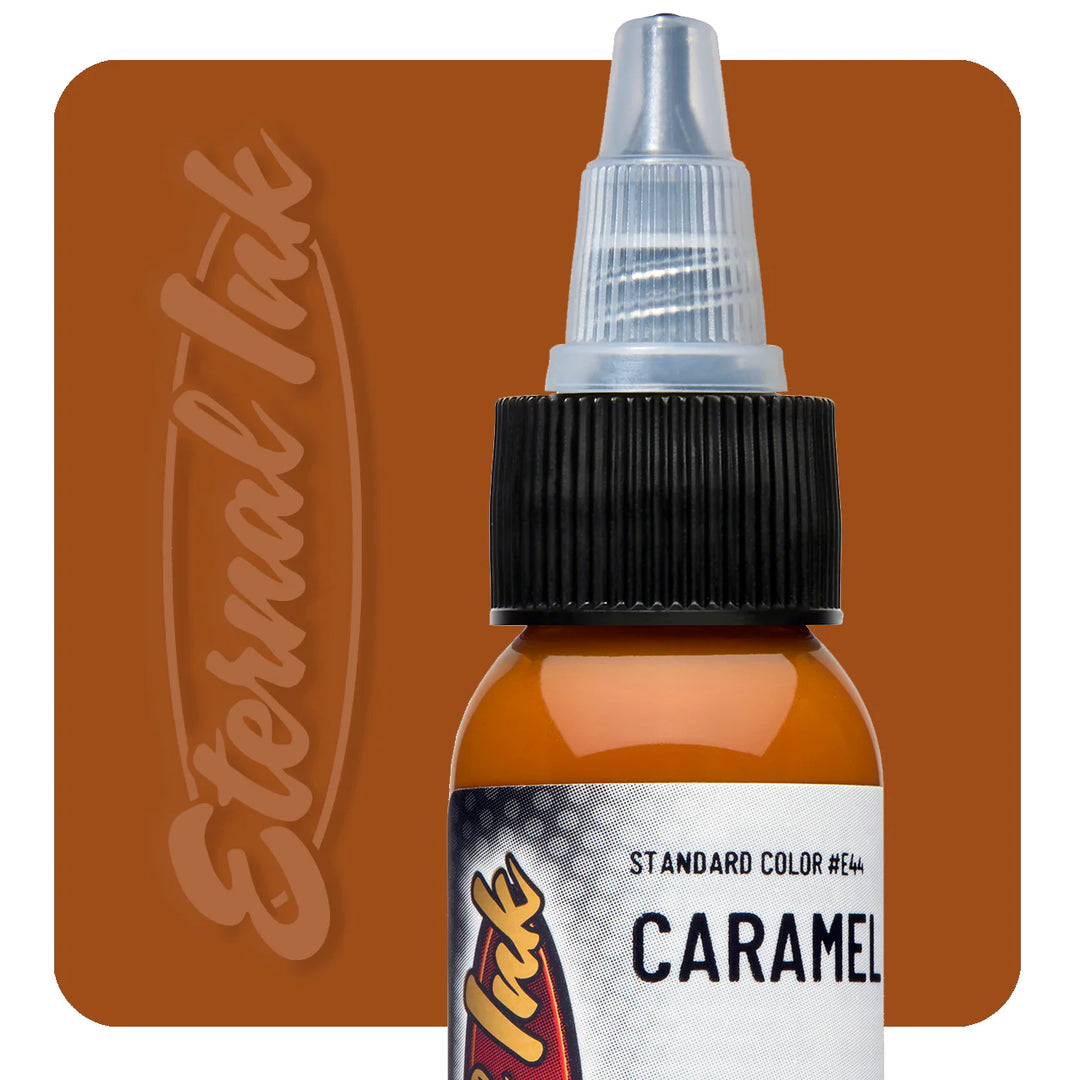
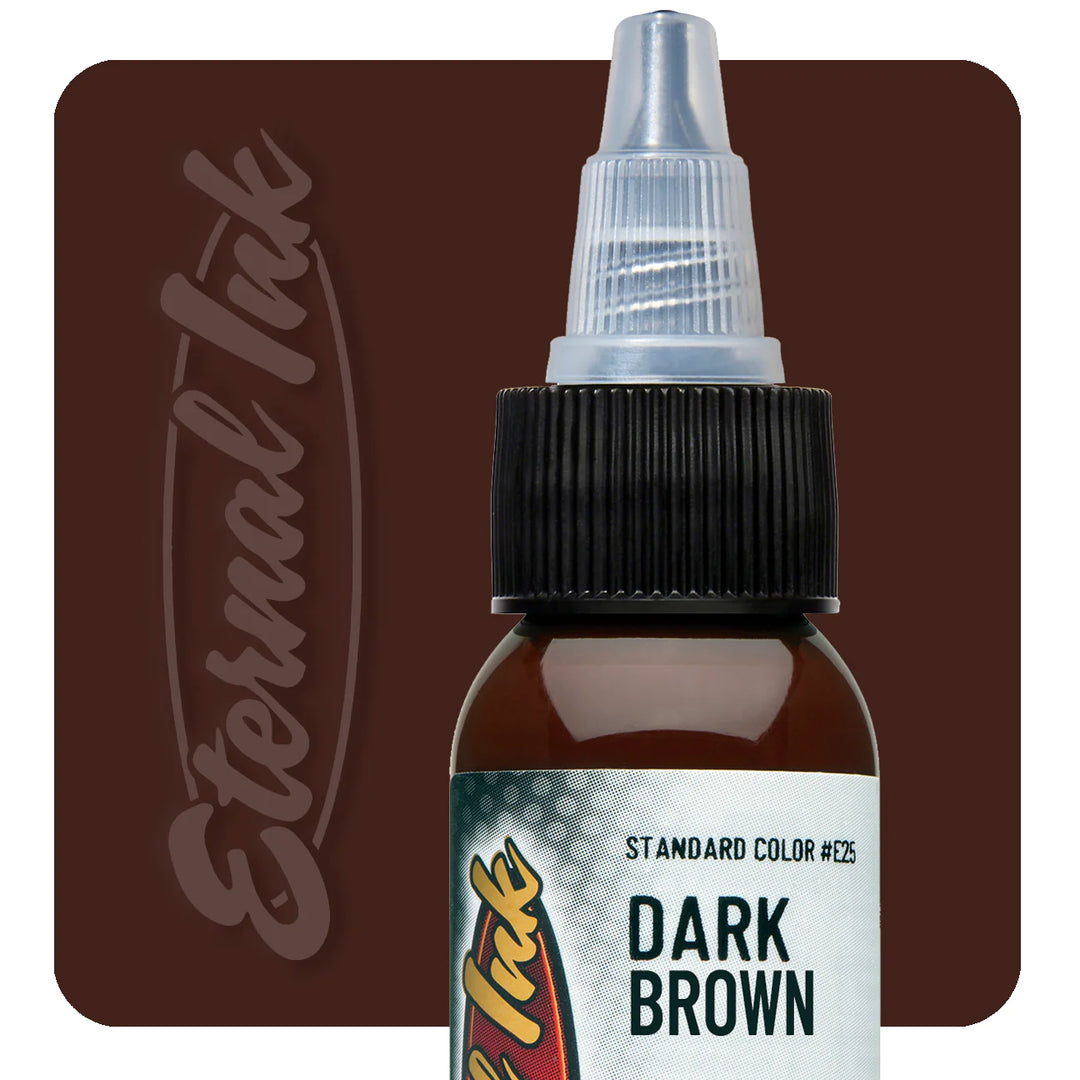
Draiff covers 11 shades with their Pro for Eyebrows range, including both the Dark and lighter options. Evenflo and Radiant add depth at the warm and neutral ends of the palette. Eternal contributes Caramel and Dark Brown — two reliable mid-tones that artists reach for when they need a consistent, predictable result on repeat clients.
What to Know When Choosing a PMU Brow Pigment
Brow skin behaves differently from lip or eyelid skin — it's thicker, oilier in most clients, and has follicles that can affect how pigment implants and retains. A few things that matter when selecting a shade:
Warm-toned skin pulls pigment warmer over time. If a client runs warm and you put in a warm brown, it can heal orange or red-leaning after the first touch-up. Going slightly neutral or cool on the initial shade usually produces a better healed result. Cool-toned skin does the opposite — a cool or neutral brown heals closer to its true value.
Technique also drives pigment choice. For microblading, you need a pigment that implants cleanly into fine hair stroke incisions without bleeding out — viscosity and particle size matter. For powder brows and ombre work, you're building gradients and depth, so the fade behaviour over multiple sessions is more important than immediate saturation.
Most experienced brow artists keep a minimum of four to six shades on the shelf — a light, a warm mid, a neutral mid, and a dark — and mix to match each client rather than pulling the same bottle every procedure.
Frequently Asked Questions — PMU Brow Pigments
What is the difference between microblading pigment and powder brow pigment?
The technique drives the pigment choice more than anything else. Microblading uses a manual blade to create hair stroke incisions, so the pigment needs to be thin enough to implant cleanly into fine cuts without bleeding out into surrounding tissue. Powder brow and ombre work uses a machine to build gradual saturation, so you need a pigment that layers predictably across multiple passes and fades evenly over time. Perma Blend and Biotek both work across techniques — just check viscosity and particle size before switching a shade from machine to manual work.
Do warm or cool brow pigments heal better on different skin tones?
Skin tone and undertone both affect how a brow pigment heals. Warm-toned skin pulls pigment warmer over the fade cycle — a warm brown on warm olive skin can heal orange or reddish after the first touch-up. Choosing a neutral or slightly cool shade on the initial session usually corrects for this. Cool-toned or fair skin does the opposite — a cool-leaning brown heals closer to its true value. On deeper skin tones, pigment retention is generally stronger but colour can appear darker initially before settling. Most experienced artists go one shade lighter than they think they need on the first session, especially on deeper skin.
How long do PMU brow pigments typically last before fading?
Most PMU brow pigments last between 12 and 24 months before a touch-up is needed — oily skin and sun exposure push that number down, dry skin and good aftercare push it up. Clients with very oily brow zones often see noticeable fading within 8 to 12 months regardless of brand. That's also why PMU-specific formulas like Perma Blend and Biotek are worth it over standard tattoo inks — they fade out cleanly instead of shifting blue or green over time.
Can I use the same pigment for microblading and ombre brows?
Yes, in most cases — but it depends on the specific formula. Brands like Perma Blend, Etalon Mix, and Biotek formulate their brow ranges to handle both techniques. Where artists run into trouble is using a high-viscosity pigment designed for machine work in a manual microblading blade — it can sit in the incision rather than implanting cleanly. If you do both techniques, test each pigment across both application methods before using it on clients.
What is the difference between Perma Blend and Biotek brow pigments?
Both are PMU-specific brands built for facial skin, but they work differently in practice. Perma Blend is known for consistent, predictable fading — Taupe, Brunette, and Darkest Brown are among the most reordered shades in high-volume brow studios because artists know exactly what they're going to get on every heal. Biotek's range is more technical — shades are optimised for specific skin types and conditions, and it's a brand that rewards artists who take time to understand the system rather than just pulling the closest colour. Etalon Mix is the most systematic of the three — four numbered shades covering the most common brow colour categories, straightforward to match without overthinking it.
How many brow pigment shades does a new PMU artist actually need?
Four to six shades covers most clients when starting out: a light taupe or blonde, a warm mid-tone, a neutral mid-tone, a cool mid-tone, and a dark. Having both a warm and neutral option in the mid-range is where most artists feel the biggest difference — it lets you match undertone accurately rather than defaulting to the same shade on every procedure. As your client base grows and you start hitting edge cases — very fair skin, very deep skin, correction work on previous PMU — you build the shelf out from there.
OUR REVIEWS
Trusted for 15+ Years by 20,000+ Happy Customers!